POST 239 – 14-21FEB2016
CUBA / VARADERO
Charles Phan Hoang Letter
Pictures

Blog www.clubmasterhoang.blogspot.com
POST 329 – 14-21FEB2016
CUBA/VARADERO
g.m phan hoang
|
|
I have been visiting six cities in Cuba: Varadero,
La Havana, Matanzas, Santa Clara, Trinidad, and Cienfuegos. All are very
different from each other.
Cuba is the biggest island of the Cuban Archipelago which is made up of
over four thousand small keys and islands.
According to the people here Cuba counts 288 beaches, most of them,
with splendid white sand, are among the best in the world. With 110,860 km2
(42,820 sqmi) Cuba is larger than Portugal (92,212 km2) or Autriche (83 871 km2), and much larger than Taïwan (36 188 km2),
Sicily (25 708 km²), or Israel (20,770 km²) as I can notice.
Before landing on Varadero airport my flight passed over Florida and Key West. It is absolutely impressive
to see from the sky the long Overseas Highway US 1 connecting Miami to Key
West -113-miles (181.9 km) - through a series of small islands and over
the sea like an endless bridge. About ten years ago, with one of my elder
brothers I have been driving on this special Overseas Highway in a day where
the sea was not calm and the wind was strong. At some points, some high waves
almost passed over the road and that made us feel this Overseas Highway much
longer than we had expected. When we safely reached Key West we did not
hesitate to go to the best restaurant in town, no matter we were very hungry
or not, nor how our travel budget could be respected.
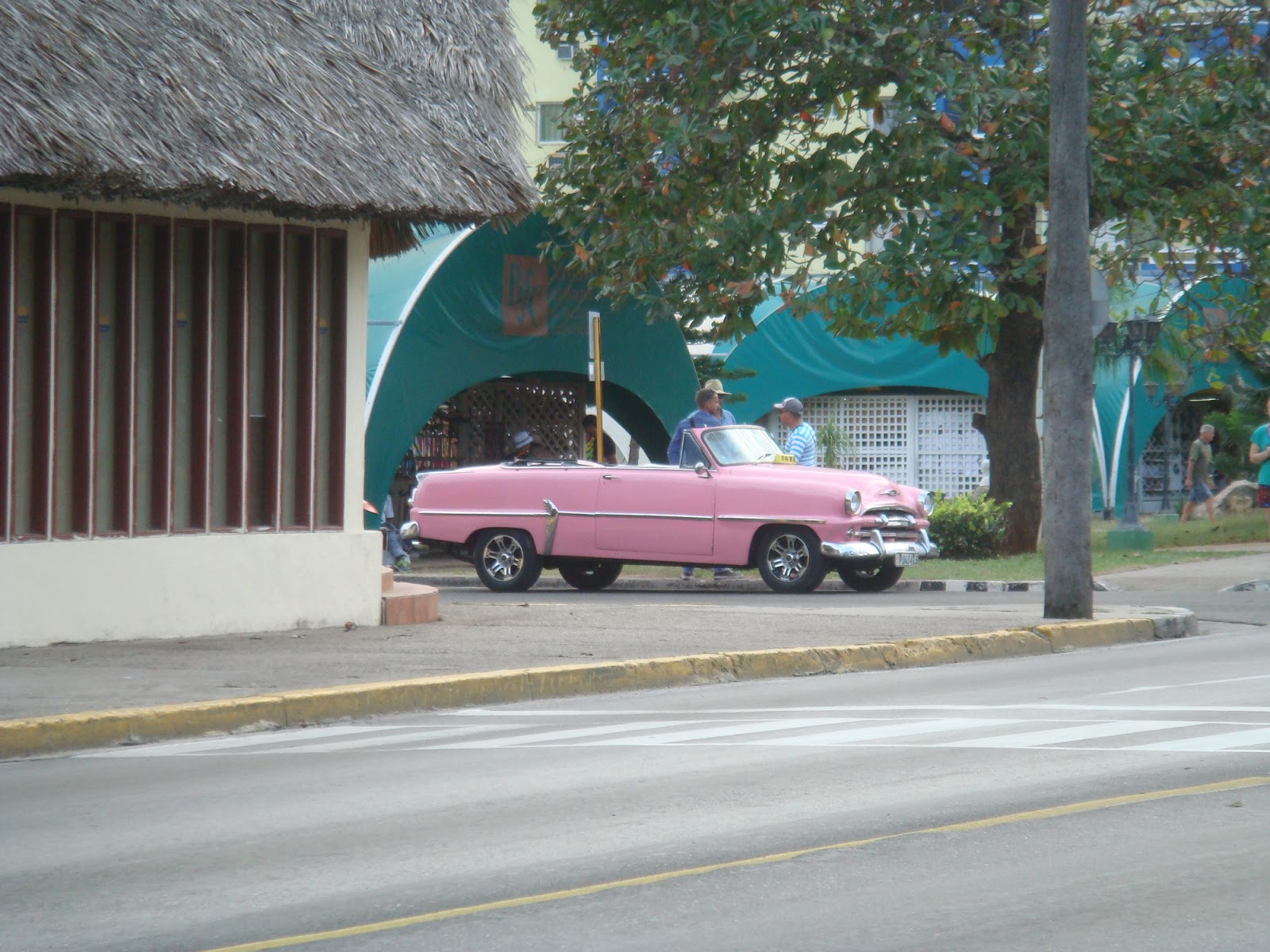
When I arrived to my hotel Puntarenas in Varadero it was around Friday noon (February 05, 2016). It is clear that this resort is exclusively for foreign tourists. At the beautiful beach, at the pools, or at the bars I did not meet a single local person except the staff, those who work for the hotel providing all kind of services, and some travel-agents who come every day to sell their tours. The majority of the guests in this place, as I can assume, are Canadians, Russians, and Spaniards. Among the rest I could count some German and some Japanese tourists. The downtown is about 5 or 6km away from Puntarenas; twice a day a free bus assure the connection, otherwise taking a taxi or a horse-drawn carriage (the calash two wheels or the barouche four wheels) cost about US$10. VARADERO is a peninsula and is only 1.2 km wide at its widest point. This spit of land however extends more than 21-km (13-miles) and it is the largest and most popular beach resort in Cuba. Its pristine white sand beach is considered by many to be one of the most beautiful in the world. At the north-eastern end of the peninsula there is a nature reserve with virgin forests and beaches. The center of town is very interesting with many Cuban small shops, restaurants, bars and coffee shops; Cuban music everywhere. The most attractive things to the tourist could be seeing a lot of beautiful American old cars running up and down the main street mixing with horse-drawn carriages. This brings the visitor back to the 50s or 60s. So life is very romantic when turning to the past as a tourist; but this spectacle could make you think of the dark side of reality: during more than half a century this society has not changed much while the whole world is changing and the average of salaries provided from government seems to be about $30 a month and a liter of gas costs about $1.50. But in this country not much people could own a car, no traffic jam, not much gas pollution. What a paradise! I have taken numerous pictures of these beautiful old American cars and horse-drawn carriages to share with you in this Post 239. Most of them are taxis. I liked to walk and hang around in the city center, a section stretched about three kilometers from where there is the only bank to exchange money (32 Street), up to the end of a very nice park (further the 55 Street) where I could quietly do my exercises. Inside this park a small lake, some trees, and a bridge make the place romantic but I did not see much local people come enjoy life here. Next to the lake, at the end of the bridge I found a quiet traditional Cuban restaurant. Menus vary from 13 to 19 Cuc, about 14 to 20$ US, I will talk about this mysterious Cuban Convertible Peso in my next Post. I opted for the 15 Cuc, a fabulous lobster with local beer, dessert and coffee included. When I get out of the restaurant, certainly a glass of Cuban beer could not turn my mind enough to believe in what I saw on the parking: four or five beautiful and giant motorcycles, Harley-Davidson or so, parked there! Who could ride such expensive monsters in this so poor island? I was curious to know. Minutes later I found the group of these impressive guys in a distance, they are tall and well equipped. I approached them and dared to ask my question in Spanish. Unfortunately no one understood my Spanish. They are German bikers! They are very well organized to bring their group travelling here. Sometimes I crossed the main street to go to the beach. When I looked over the sea I know Florida is not that far away. I remember the time, for twelve years, I regularly came to Miami conducting seminars on Research Methodology and on these occasions I got a number of Cuban good friends in this city; sometimes we talked about the problems of Cuba. In Florida there is a very large community of Cuban American people. We know they have a dream. When will their dream come true? (to be continued) g.m (18 February 2016) |


x


xx